Reading time 5 min
Why There’s a Sewage Smell in Your House
A persistent sewage smell inside the house raises an immediate sense of wrongness. The odor does not smell like cooking or ordinary household smells. It is generally characterized by the scent of rotten eggs, sharp and hanging in the air, and it emanates from someplace in the drainage system where organic material is decomposing. When that scent appears indoors, sewer gas has a route into living spaces. We see these calls every week, and catching the source early usually shortens the time and expense required to fix it.
What Does a Sewage Smell in the House Mean?
You notice the smell. It usually means sewer gas is present. There are several technical reasons why your house smells like sewage. Sewer gas is a mixture of gases produced as waste breaks down in pipes. A brief overview shows the mix varies, but certain components show up commonly. Hydrogen sulfide has the smell of rotten eggs and causes eye and pulmonary irritation. Methane is a colorless gas with no odor but can displace oxygen and be ignited. Ammonia causes sharp and pungent inflammation of the respiratory tissues. Carbon dioxide can reduce the oxygen in the air if present in higher doses. Other sulfur and nitrogen compounds and volatile organics contribute to the severity of the odor. Sometimes the fumes of cleaners or solvent vapors are also accompanying them. If this is the case, the problem in the house is most probably in the sewage system.
Common Causes of Sewage Smell in Your House
The most frequent sewer smell in house causes involve predictable weak points in residential plumbing. Those weak points fail with time, and gases follow the path of least resistance into rooms. A dry P-trap allows sewer air to rise through a fixture. Seldom-used sinks, tubs, or shower drains evaporate their water seal. Clogged drains accumulate hair, soap scum, grease, and food. Organic material caught inside the pipes breaks down and releases odorous gases, which escape through the nearest opportunity. The vent pipes running through the roof also fail. Leaves, bird nests, or storm damage can block vents and shut down the pressure-equalizing system, allowing gases to revisit the house. Cracked sewer pipes develop from corrosion, ground movement, or root intrusion. Cracks or loose joints let gas, and sometimes wastewater, leak into soils, basements, crawlspaces, or wall cavities where odors migrate into living areas. A main line obstruction builds pressure and forces gases and wastewater toward fixtures, sometimes producing visible backups. The wax ring at a toilet base forms both a watertight and airtight seal. When that ring deteriorates or the toilet rocks, sewer gas can escape from under the bowl and concentrate in the bathroom.
Sewage Smell in the Bathroom or Kitchen
The appearance of a sewage odor in the home often indicates a malfunction in the plumbing system, such as a dried-out trap or a blocked vent pipe, which requires prompt identification and resolution to maintain a healthy living environment.
In the bathroom
Bathrooms tend to show problems first because they contain several fixtures and long runs of pipe. A dry trap under an infrequently used tub or shower announces itself with a noticeable smell in the bathroom. Hair and soap scum clog shower drains and lead to smelly decomposition. A loose or rocking toilet often indicates a failed wax ring. Floor drains in basements depend on water seals and will smell when they dry out. When venting that serves these fixtures is blocked, the obvious openings become the escape route for sewer gases instead of the roof vent, often leading to a situation where the bathroom smells like sewage.
In the kitchen
Kitchens foster an environment that breeds resistant smells. Grease and food particles tend to stick to the pipes. Garbage disposal units trap minute particles in crevices and harbor potent smells as they decompose. A less-used prep sink can dry up its trap, permitting gas to seep into the room. Dishwasher drain connections that lack a proper high loop or an air gap can allow sewer gas to siphon back, which often results in plumbing that smells like sewage. Grease and oil buildup inside drain lines create sticky blockages that trap water and waste and produce persistent smells. The location where the smell is strongest often points to whether the source is a single fixture or something more systemic.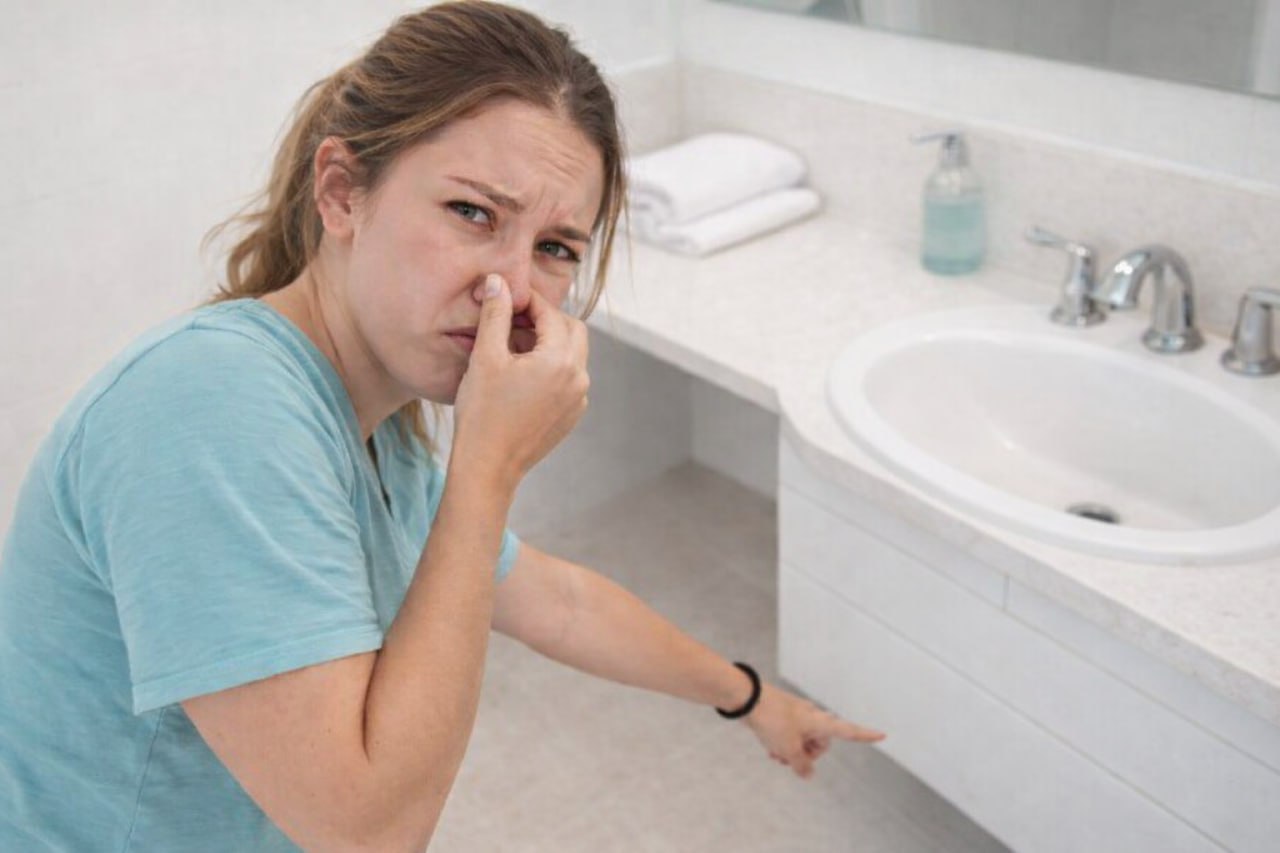
Is Sewer Gas in the House Dangerous?
The sewer gas smell in the house is more than unpleasant; it can be a real health and safety concern depending on concentration and exposure. Hydrogen sulfide is responsible for the odor of rotten eggs and is irritating even at low concentrations. Headaches, dizziness, nausea, or irritation of the eyes or throat are typical. At higher concentrations, the sense of smell is dulled due to the chemical irritation. This overrides the warning. High concentrations of the gas may lead to loss of consciousness and even death. Methane is an odorless and colorless gas. Methane has the ability to displace oxygen in enclosed areas. This may lead to asphyxiation. Methane gas is flammable. If ignited in the proper proportion of a mixture of gases and air, it may lead to an explosion. Ammonia gas, carbon dioxide gas, and other trace gases increase irritation and asphyxiation on a large-scale absorption. If occupants develop severe headaches, nausea, lightheadedness, or breathing difficulty, treat the situation as potentially hazardous and contact a specialist for emergency plumbing assistance immediately.
How to Get Rid of a Sewage Smell in the House
Some problems can be resolved with ease in your home. If there are persistent or unpleasant odors, problems indicate a lack of responsiveness to short-term solutions. Repairing a dry trap can solve initial problems. Water flowing through unused drains or a cup of water poured through the trap regenerates the water seal in a drain. After removing obvious debris from drain openings and using safe cleaners to dissolve organic matter, drainage problems and odors should disappear. A cold water flush with ice and citrus through a disposal removes food buildup in a disposal and solves problems with these units. If the toilet wobbles when rocking it, it bypasses problems related to a leaking wax ring on the underside of the fixture. Tests from ground level of rooftop vent pipes with possible obstructions and a roof check when something appears amiss can help avoid problems with roof vents. If the smell returns rapidly or if there are signs of structural leaks, a professional evaluation and specialized drain services are necessary to ensure a long-term solution.
When to Call a Professional Plumber
Some scenarios clearly require a trained plumber. If the smell persists after refilling traps, cleaning drains, and checking exposed fittings, the problem is likely hidden or systemic. Slow drainage across multiple fixtures, gurgling noises in drains, and odors appearing in more than one room are classic signs of a main-line clog or venting failure, which may necessitate a professional sewer line repair. Visible leaks, water stains, and a wobbly toilet can demonstrate mechanical problems, which need repair. In-store remedies not producing results can lead to the use of power augers and hydro-jetting. In the event that a smell results in headaches, vomiting, or difficulty breathing for persons in the residence, emergency measures may be necessary.
How Professional Plumbing Inspection Helps Identify the Problem
Sometimes, the location of sewer gas emissions can be obscured from sight, so experts employ diagnostic analysis in order to determine a problem from which a homeowner might not be aware. A video camera inspection provides a real-time visual examination of sewer pipes and can detect problems in the pipes, such as damage from roots, buildup, and offset connections. A smoke test differs from a camera inspection in that it involves harmless smoke introduced into a DWV system in order to determine the location of emissions through dry traps and other sources of sewer gas emissions, even behind walls and under floors. Hydro-jetting sends a stream of high-powered water through a system in order to remove grease buildup, mineral buildup, and roots, thereby reducing conditions necessary for the creation of sewer gas emissions.
In a nutshell, finding and fixing the source of sewage odors saves homeowners from repeating short-term fixes and prevents further damage. If you face a relentless, or worrying odor, schedule a professional inspection today to bring comfort and safety back into your residence. Call American Choice Plumbing today for immediate diagnostics and repair.