Reading time 5 min
Why won't my toilet stop running
Care to guess what household problems there are that can frustrate in quiet, behind-the-scenes, and expensive ways? A constantly running toilet, for one. At first, it’s the muffled sound that’s particularly irritating. And then, later, it’s the sudden and extreme amount that appears for the water bill. This scenario is all too familiar at American Choice Plumbing, but understanding the relationship between the tank and the bowl will make it less confusing.
How a Toilet Works (Quick Overview)
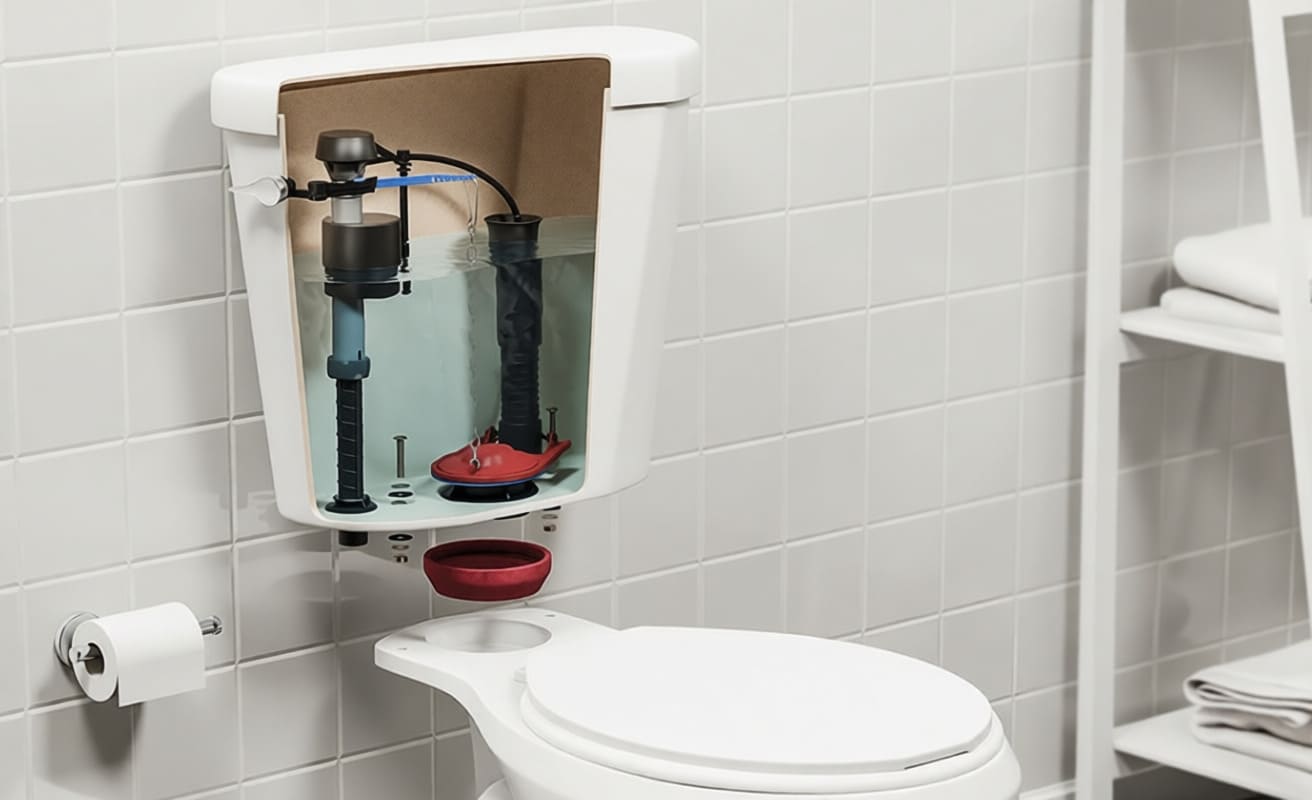
The working parts are visible the moment you lift the tank lid. Understanding these mechanics is the first step to diagnosing why your toilet won’t stop running after a flush. Water remains inside the tank until the handle raises the flapper from its seat. This sudden flow of water into the bowl and trapway initiates the siphon action, flushing the bowl and expelling the waste into the drain.
When the tank empties nearly to the end, the flapper closes and closes off the flush value. This action causes the fill value, also sometimes known as the ballcock, to open and fill the tank again. A refill tube connects the fill value to the overflow pipe to provide the top-up to the bowl’s trap. A float turns on and off the fill value as it rises with the water in the tank to set the desired water level in the tank. Most toilet tank problems occur when the float, which may be a ball on an arm or a cup riding the fill valve shaft, fails to signal the valve to close properly.
Common Reasons Why a Toilet Keeps Running
Several specific parts inside the tank are usually responsible when the toilet won’t stop:
- Worn or misaligned flapper.
- Faulty fill valve.
- Incorrect float height.
- Chain issues.
- Overflow tube problems.
A worn flapper is one of the simplest and most common running toilet causes. Worn rubber parts harden and edges warp over time while mineral scale builds up. The seal becomes imperfect and even a tiny gap lets water sneak into the bowl. The fill valve then opens periodically to restore the tank and the toilet sounds like it runs forever.
Fill valves can also fail. Seals and seats inside the assembly wear away or clog with deposits. A valve that will not seat all the way allows water to either trickle in constantly or cycle on and off. Older ballcock designs are familiar to many homeowners. Modern fill valves are compact and precise. When they fail replacement is usually the most reliable fix.
Float settings that sit too high push water above the overflow pipe. Water pours into the overflow and the fill valve keeps trying to keep up. A float that is stuck low causes weak flushes because there is not enough stored water for a proper siphon.
Often the lift chain is the villain. A chain that's too short doesn't let the flapper close all the way. A chain that's too long may tangle or get caught under the flapper. That little tube that refills the overflow pipe can be routed wrong, kinked, or pushed too far into the overflow. That could cause a siphon or spray water in a place it shouldn’t, creating a steady flow into the bowl.
Signs Your Running Toilet Needs Attention
Not every running toilet makes a loud announcement. Watch for these common clues if your toilet keeps running:
- Constant water sound.
- Tank refilling on its own (phantom flush).
- Weak or incomplete flush.
- Rising water bill.
- Visible ripples or movement in the bowl.
Where there is constant hissing or gurgling in the tank when it is inoperative to serve anyone, this is an easy fix. Where one thinks it is flushing from time to time but is phantom flushing, it is an indicator that there is some leakage between the tank and the toilet bowl. A toilet that takes multiple flush actions to flush out is an indicator that it is holding less volume in the tank because it is leaking.
Many homeowners discover a running toilet only when the water bill arrives. A routine toilet inspection helps identify a modest, steady leak before it becomes a noticeable cost over weeks and months. If you peer into the bowl and see small ripples or a shimmering surface while it has not been used, that movement is water quietly entering the bowl from the tank.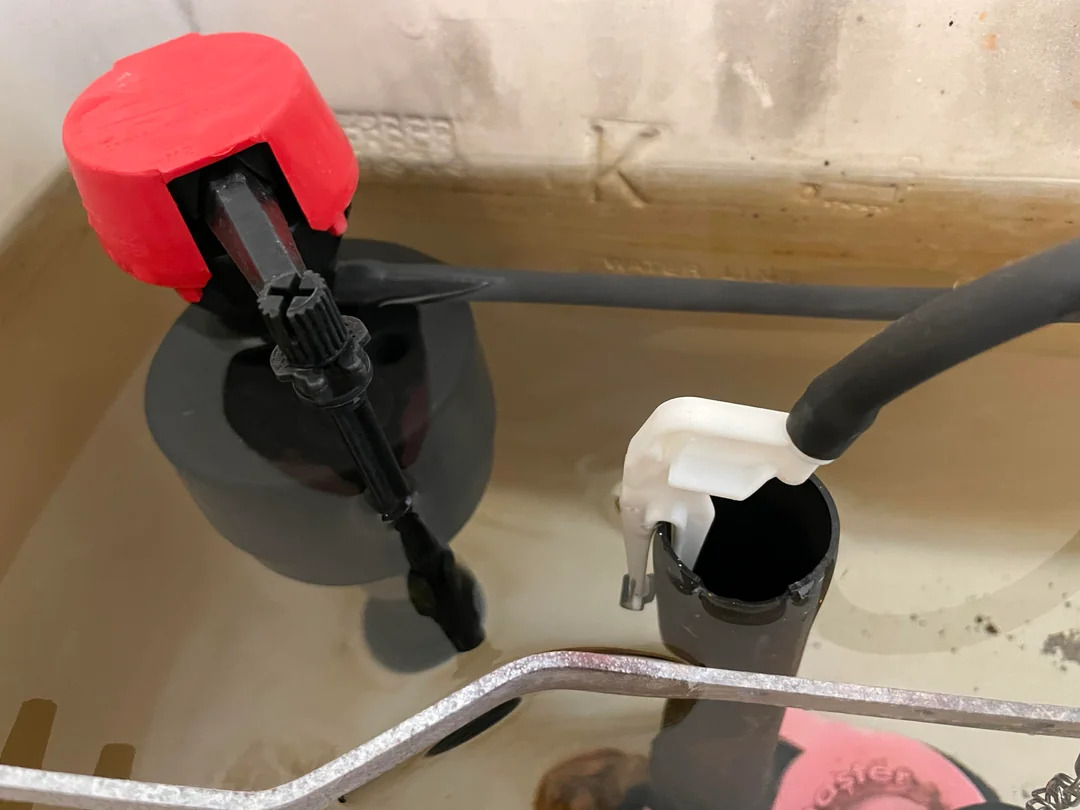
Can a Running Toilet Waste Water?
Yes. They are often larger than people think. Even a quiet drip leaks 30 to 50 gallons a day. Noises of many leaks can range from 200 gallons to more a day. This translates to tens of thousands of gallons in a year.
Industry reports that losses can run anywhere from 30 to 500 gallons per day, depending upon the nature of the leak. This equates to an annual loss that can begin in the range of 10,000 gallons to much higher levels. Cost impact would, of course, depend upon local charges. A leak spilling some 200 gallons per day would contribute an amount that would range from $20 to $50 per month based upon costs that would run between $2.50 to $5.00 per 1,000 gallons.
The environmental cost also matters. Wasting treated water strains supplies in drought-prone regions and carries an energy cost for treatment and distribution. It increases the load on wastewater systems. Compared with other household leaks, a running toilet tends to be the most profligate. A dripping faucet might waste around 3,000 gallons a year while a toilet running continuously can account for many times that amount.
Basic Checks You Can Do Yourself
Simple observations and basic plumbing checks often reveal the culprit before you call for service. Handle the tank lid with care because porcelain breaks easily and parts can move unexpectedly.
Look at the flapper and its chain first. Check for cracks, stiffening, or mineral deposits on the flapper. When the flapper is closed, the chain should have about 1/2 inch of slack. A chain that sits too tight or becomes tangled will stop the flapper from seating properly, which is a common point of failure when addressing how to fix a running toilet. Try a dye test by dropping a few drops of dark food coloring into the tank and waiting 15 to 30 minutes without flushing. Colored water in the bowl indicates a leak through the flapper.
Second, observe the water level and determine the type of float. The proper water level will be around 1 inch below the top of the overflow pipe. Ball-type floats are quite visible and cup-type floats are mounted on the fill valve shaft. If the water is higher than the overflow level, the float can be raised slightly. Modern fill valves come with a clip or a screw that allows you to adjust the cup-type float. Ball float arms in older models can be bent slightly downward.
Also, look at the refill pipe and the handle. Make sure the refill pipe supplies the overflow pipe, rather than being forced in, spraying, or both. Make sure the flush handle can easily move and comes back automatically to its original position. This will ensure the handle sticks, keeping the chain and flap open. Also, if some of the pivot points are sticky, a small amount of silicone lubricant will help.
When a Running Toilet Becomes a Plumbing Problem
If basic checks do not stop the running or a leak returns quickly, the issue is probably beyond a simple home fix. When a toilet won’t stop filling even after replacing a flapper or adjusting the float, it usually points to a failing fill valve or another internal part that needs professional diagnosis.
Complex fill valve problems, hidden fractures in the flush valve body, water constantly draining into the overflow tube, or porcelain cracks are clear signs to call a plumber. A crack in the tank or bowl calls for replacement rather than a patch. Water near the floor can mean a failed wax ring, a supply-line leak, or a compromised closet flange. Any of those can damage subfloor and finish materials if left unchecked, often requiring emergency plumbing intervention to prevent further structural issues. Multiple fixtures behaving poorly at once may hint at high system pressure or poor water quality affecting components throughout the house.
If you do not want to work under the tank, or if you do not have replacement parts and proper tools, the work should be done professionally. The forcing of components or using improper parts can make a small problem much, much worse.
How a Plumber Fixes a Toilet That Won’t Stop Running
A trained plumber usually begins with a careful inspection to identify exactly why your toilet is running and provide a diagnosis. Inside the tank they check the flapper, fill valve, float, overflow pipe, refill tube, and handle assembly for wear, mineral buildup, corrosion, or misalignment. They verify the tank’s water height relative to the overflow and often perform a dye test to confirm a leaking seal. If high water pressure is suspected, a pressure gauge will show whether a pressure reducing valve is needed.
Repairs follow the diagnosis. A worn flapper is replaced with a compatible or adjustable model and the chain length is set correctly. A failing fill valve is usually replaced as a unit. Pros typically install a dependable assembly like a Fluidmaster 400A or a Korky QuietFill and then adjust the float so the valve shuts off precisely at the desired level. If the overflow tube or flush valve body is cracked, the plumber may replace the entire flush valve assembly-a task that often entails removing the tank from the bowl.
Beyond the immediate repair, pros address collateral issues. They clean mineral deposits that impede performance. They install or adjust a PRV when pressure harms fixtures. When removing a toilet, they apply a new wax ring or seal on reinstallation to ensure a watertight joint. Several test flushes and pressure checks to confirm the fix reduce the likelihood of a revisit.
Our professional plumbing service aims for repairs that stop the running now and prevent repeat visits later so you save water and avoid the slow, costly consequences that come with ignored leaks.